.. Are the knowledgeable and the ignorant equal? In fact, none will take heed except the people of understanding.”(Qur’an;39:9)
“The heart of him who has understanding seeks knowledge, but the mouths of fools feed on folly.”(Bible, Proverbs 15:14)

Study is one of the great sources of happiness, if not the greatest, because it allows us the full expression of our rational nature. In appreciating philosophical or scientific truths and incorporating them in our own knowledge, we are reaching the peak of what it is to be human. Happiness is not pleasure, but a by-product of a meaningful life.[Aristotle]
Aftab Khan regularly writes on religion, philosophy, history, sociology, culture, power politics, national, international issues and other topics. His work is regularly published in Journal (DJ) since 2006. The collection of books and articles by Aftab Khan [SalaamOne Network] has been made available here.
[Note: SalaamOne.com is down, shall be back soon..]
 Atheism & Humanism:
[Note: SalaamOne.com is down, shall be back soon..]
Atheism, denying existence of God is contrasted with theism, which in its most general form is the belief that at least one deity exists. Arguments for atheism range from the philosophical to social and historical approaches. Rationales for not believing in any supernatural deity include the lack of empirical evidence, the problem of evil, the argument from inconsistent revelations, and the argument from nonbelief. This book explores; Religious Humanism, Existence of God, Philosophical Arguments for God, Criticism on Existence of God, Proof of God & Scientific Facts. Keep reading Online or Download pdf.

The Creator:
The idea of a Supreme Power who is the First Cause of all things, the Creator and Ruler of heaven and earth has always been part of human nature from the beginning. The beliefs supporting the existence of God or against it, including the middle positions have resulted in an array of doctrines, the most prominent among them are; Theism, Monotheism, Theodicy, Deism, Agnosticism and Atheism. The main issue which have remained the center of attention of believers of the God has been; How to prove the existence of God rationally? This has been dilated upon in this book. Read Online or Download pdf.

خالق کائنات کون؟ مختلف عقاید جن میں خدا کے وجود پر ایمان رکھنا یا اس کے مخالف جن کے نتیجے میں مختلف اقسام کے نظریات جیسے کہ خدا پرستی (Theism)، توحید پرستی (Monotheism-موحد،)، تھیوڈسی (Theodicy- خدا کی لامحدود طاقت کا برائی کی موجودگی میں دفاع)، دی ازم (Deism)، اگناسٹک (Agnosticism-خدا کےہونے یا نہ ہونے کے متعلق لا تعلق)، دہریت، الحاد ( Atheism) وغیرہ – توحید (Monotheism) ؛ ایک خدا کے وجود پر ایمان ہےجو اس شرک سے مبرا ہے. توحید یہودیت، عیسائیت(کسی حد تک ) اور اسلام کی خصوصیت ہے، جن کے مطابق خدا دنیا کا خالق ہےاورنگران بھی جو انسانی واقعات میں مداخلت کرتا ہے- خدا رحمان اور مقدس ہے جوتمام نیکیوں اوراچھائیوں کا منبع ہے- اس کاینات کا خالق کون؟ کیا یہ ابدی ہے اور حادثاتی طور پر خود بخود وجود پزیر ہوئی یا اس کا کوئی خالق ہے؟ ... پڑھتے جائیں ان لائن ... یا ڈاؤنلوڈ کریں پی ڈی ایف ..

The Creation:
Man has always been inquisitive about the origin and creation of universe to which earth is just a small part. The whole cosmic system of matter and energy is called universe. In this book the traditional narratives and myths of Creation, Scientific & theosophical theories have been explained, The Grand Design of creation include, Qur’anic and Biblical narrative of creation and their comparative analysis. Synthesis of Islamic & scientific narrative of creation is revealing. Other subjects include human creation; Origin of life, Theory of Evolution and Refutation by Christians; the Islamic perspective include in favor and opposing views, which may appear strange to some readers. Read Online or Download pdf.

The Guidance:
It is said that human is a thinking, rational animal. He knows what is right and what is wrong, so does he/she need some additional source of Guidance? Some say ‘No’, while others say ‘Yes’ and still there are who say ‘I Don’t know’. The Book “Guidance” includes, natural guidance, miracles & signs; The brief on the messengers of God; from Adam – Noah – Abraham – Ishmael – Isaac – Jacob -Moses – David, Solomon - John The Baptist (peace be upon them all), Prophet Jesus Christ, The Son of Mary (peace be upon him) and The Last Messenger; Muhammad (peace be upon him). The Sacred Scriptures. i.e. The Bible and Qur’an have been briefly introduced. Read Online or Download pfd.

Islam: The Legacy of Abraham:
Man endeavors to live the life within the desired parameters to achieve His pleasure, the objective of his creation. This original religion of Abraham, was revived: Islam, in its unique spirit of monotheism, fourteen hundred years ago in concordance with the light of reason; exclusive of mysterious doctrines to cast a shade of sentimental ignorance round the original truths rooted in the human intellect, representing the latest development of the religious faculties. The Book “Islam: The Broader Perspective”; includes the Islam of Prophet Abraham, refutation of Prophet Jesus Christ by Jews, evolution of Christianity, revival of Legacy of Abraham (pbuh) by Prophet Muhammad (pbuh). Its doctrines, practices and the concept of Predestination has been debated. The other subjects include; Jihad, Shari’a , Priesthood, Human Rights and role of Islamic civilization in the development of humanity and the modern challenges. Read Online or Download pdf.

The Last Prophet:
Previously the messengers were sent for the particular nation or community for particular time. Once a new messenger or prophet came it was obligatory to follow him, denying one messenger means denying all the messengers. However this system of messengers came to end with the last Prophet Muhammad (pbuh). Muslims while believing in all the previous messengers of God and scriptures, adhere to the message preached by the last Prophet Muhammad (pbuh) and The Qur’an as the final uncorrupted holy scripture not restricted to any particular race but for the guidance of whole humanity, while superseding all the previous scriptures.... Keep reading Online or Download pdf.
Universe Science & God:
“Verily in the heavens and the earth are Signs for those who believe. (Qur’an; 45:3).
Science is beginning to see the entire universe as an interlinked network of energy and information. Our capacity for survival must come from reason and knowledge." The follower of 3 great monotheistic faiths believe that God created the universe and governs it as per His laid down rules. The atheists reject such a set of beliefs. In philosophy there are many rational, metaphysical, logical, empirical, or subjective arguments for the existence of God. Interestingly the conclusions reached by science recently were mentioned 1400 years ago in the last Testament; The Quran which provides theological, philosophical and scientific evidence of existence of God. To derive maximum benefit it is suggested that the book may be read with an open mind keeping aside the existing ideas. Read Online or Download pdf.

Palestine, Bible, Quran & History
Palestine is the most complex geopolitical and religious issue, confronted by the humanity, which if left unresolved will continue to be threat to the world peace. This historic flashpoint which kicked off the clash of civilizations, centuries ago, still has the potentials to flare up to repeat the history with unpredictable terrible consequences. While the followers of three Abrahamic faiths; Judaism, Christianity and Islam have the historic, religious, emotional and sentimental attachments with this land, no sane person can agree to deny the right of the Palestinian people as human being to enjoy the fruits of freedom in their own land in this age of freedom and democracy. The Zionists claim that; ‘this land has been given to them by God as His chosen people’. To ascertain the veracity of this claim and to contemplate possible peaceful resolution, this issue is being reviewed in the light of Bible, Qur’an & History. Read Online or Download pdf
The USA to support Zionism on religious grounds is termed as Christian Zionism. The white evangelical Christians, 81 percent of whom voted for Trump, for them Israeli occupation of Palestine is a religious obligation. The policies of USA, the lone super power and the country with the largest Christian population has direct affects the world peace. A mischievous group of Zionist Christians through conspiracies and wickedness have been given a free hand to use this giant nation as a tool to implement the Zionist heinous agenda of world domination. It is very strange that how Zionists Corrupted Christian Theology to turn hostility against Jews in to favor ! Therefore there is need to analyse the Zionist claims form Bible, its validity in present environment in the light of UN Charter of human rights, US internal social, politico-religious dynamics and its role in Middle East. This .may help to make this world a better, peaceful place for the humanity by understanding the real issue. Read Online or Download 3 Parts... pdf
صیہونی مسیحیت اور بائبل
امریکی امریکن صدر ڈونلڈ ٹرمپ نے امریکی سفارتخانہ کو یروشلم منتقل کرنے کا اعلان کیا تو دنیا حیران ہے کہ امریکہ نے تمام دنیا کی مخالفت کے باوجود اتنا بڑا اقدام اٹھایا۔ بہت کم لوگوں کو علم ہے کہ امریکہ اور… [ Continue reading…]
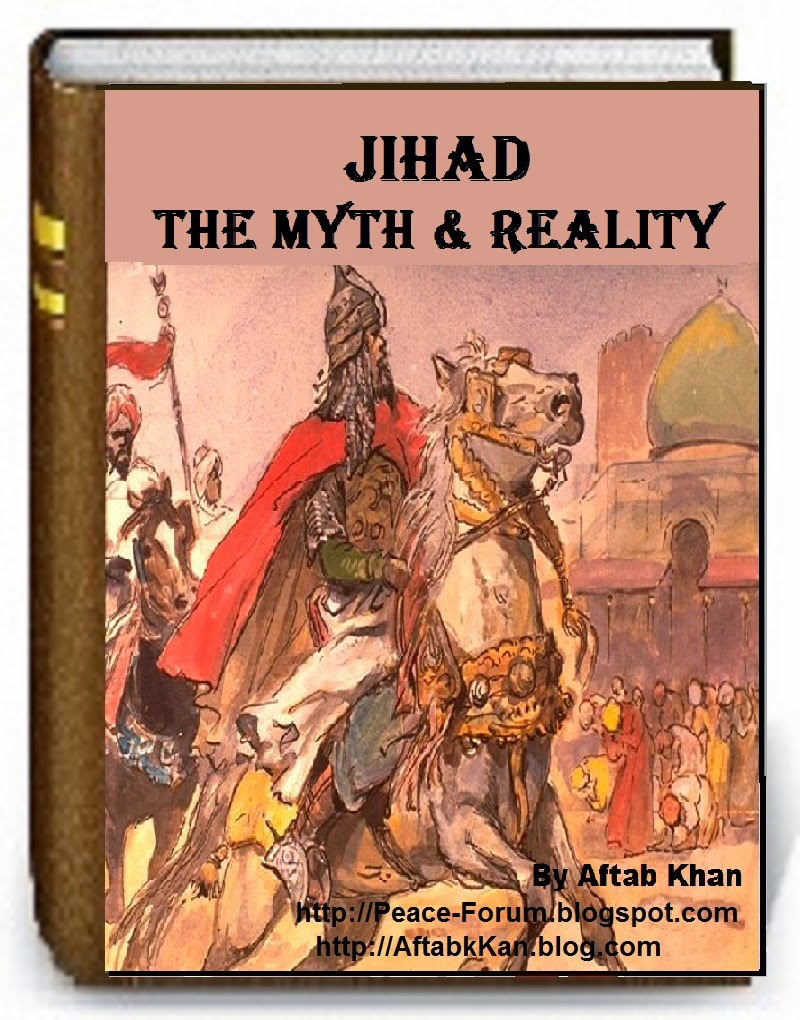
Jihad - They Myth and Reality:
The concept of “Jihad” has been misused by terrorists and Western media in negative sense. Jihad (striving) has much wider significance than a military campaign and open warfare as commonly perceived. Jihad could be with “the heart” (intentions or feelings), with “the hand” (weapons etc) a simple action, such as standing firm in defense of the cause of Islam or “with tongue” (expression through speech or writing etc). This may require speaking out in public, for extending invitation of Islam to non believers (Dawah, preaching), against ignoring Islamic principles, and writing articles or publishing books to promote Islam. The aim of making Strenuous Efforts (Jihad) has many aspects... Keep reading Online or Download pdf.
Presently the Muslim societies are in a state of ideological confusion and flux. Materialism, terrorism, ignorance and intolerance have threatened the peace, tarnishing the image of religion. These circumstances demand special response from the people who are deeply concerned about well being of humanity. Objective of this wakeup call is to draw the attention towards pressing issues which need urgent resolution. With persistent efforts we can get out of of this quagmire.
(1) Read online or download E Book, pdf at https://goo.gl/9S1cpe or
(2) Keep reading at web: http://salaamone.blogspot.com/2016/03/open-letter-to-ulema-islamic-scholars.html ) or
(3) Read in Urdu: http://salaamforum.blogspot.com/2016/03/open-letter-to-muslims-ulema.html اردو میں پڑھیں
More ... Books & Research by Aftab Khan
[Note: SalaamOne.com is down, shall be back soon..]
- Metaphysics & Eschatology
- Challenges to Faith
- Philosophy- Islamic Thought Revivalist
- Reconstruction of Religious Thought (by Dr.M.Iqbal) Summary
- Religion cause Wars?
- Tribulation and Discord in Muslim World & Future
- Islamic Culture and Modern World
- Islamic Society & Culture
- Women in Islam
- Caliphate: Redundant or Relevant?
- Sectarianism
- Learning & Science
- Theory of Evolution: Bible & Quran
- Takfir Doctrine of Terror
- Rebuttal Anti-Islam FAQs
- Rebellion by Khawarij Taliban & Shari’ah in Pakistan
- Impact of Islam on Christianity & West
- Jesus Christ in Islam & Christianity
- Dialogue- Children of Israel, Ishmael & Peace?
- تفکر ، تحقیق و تجزیہ جات
- متبادل - تفکر ، تحقیق و تجزیہ جات
There is no restriction of copy writes, any one can share the work on non profit basis, however it may be appropriate to give credit by mentioning author & this website/ link.
--------------------------SalaamOne NetWork
Knowledge, Humanity, Religion, Culture, Tolerance, Peace
Website, blogs, magazines, videos, social media, visited by millions...
- SalaamOne.Wordpress.com
- SalaamOne.com [Note: SalaamOne.com is down, shall be back soon..]
- SalaamOne.blogspot.com
- Just One God
- Peace-Forum
- Faith Forum
- Global Terrorism
- Women Folks
- Islamophobia
- Free Books & Articles
- Bible, Christ & Christianity
- Pakistan-Posts
- Aftab Khan-net
SOCIAL MEDIA:
----------------------------------------
Why read books?
The history of reading dates back to the invention of writing during the 4th millennium BC. When writing systems were created in ancient civilizations, a variety of objects, such as stone, clay, tree bark, metal sheets, and bones, were used for writing; these are studied in epigraphy. People of various religious (Jews, Christians, Zoroastrians, Muslims) and ethnic backgrounds (Syriac, Coptic, Persian, Arab etc.) in the Middle East also produced and bound books in the Islamic Golden Age (mid 8th century to 1258), developing advanced techniques in Islamic calligraphy, miniatures and bookbinding. A number of cities in the medieval Islamic world had book production centers and book markets. Yaqubi (d. 897) says that in his time Baghdad had over a hundred booksellers. Book shops were often situated around the town's principal mosque as in Marrakesh, Morocco, that has a street named Kutubiyyin or book sellers in English and the famous Koutoubia Mosque is named so because of its location in this street.
The methods used for the printing and binding of books continued fundamentally unchanged from the 15th century into the early 20th century. While there was more mechanization, a book printer in 1900 had much in common with Gutenberg. Gutenberg's invention was the use of movable metal types, assembled into words, lines, and pages and then printed by letterpress to create multiple copies. Modern paper books are printed on papers designed specifically for printed books.
In the 2000s, due to the rise in availability of affordable handheld computing devices, the opportunity to share texts through electronic means became an appealing option for media publishers. Thus, the "e-book" was made. The term e-book is a contraction of "electronic book"; it refers to a book-length publication in digital form. An e-book is usually made available through the internet, but also on CD-ROM and other forms. E-Books may be read either via a computing device with an LED display such as a traditional computer, a smartphone or a tablet computer; or by means of a portable e-ink display device known as an e-book reader, such as the Sony Reader, Barnes & Noble Nook, Kobo eReader, or the Amazon Kindle. E-book readers attempt to mimic the experience of reading a print book by using this technology, since the displays on e-book readers are much less reflective. The e-Books are quick, economical and effective method of sharing knowledge.

Ebooks serve an important purpose in the online world from different perspectives. Some of the benefits of an Ebook include:
- Interactive – with an Ebook online you can request readers to provide their comments and feedback. This is an invaluable marketing tool that lets you respond more personally to those who could be converted to customers.
- Inexpensive – the cost to produce an Ebook is relatively inexpensive when compared to other marketing material productions.
- Faster – you can produce an Ebook much faster than traditional printed brochures, pamphlets, or catalogs.
- Accessible – an electronic book can be easily accessed from virtually any device that is ebooks
- connected to the internet. Smartphones, tablets, e-readers as well as laptops and desktops can access an Ebook.
- Reusable – without a complete re-write, you can leverage your Ebook in multiple channels such as social media, industry events, and your web site. You can also send your Ebook to your email subscribers once a year, making only minor revisions where needed.
- Printable – if you desire to have a print version of your Ebook the effort is relatively simple.
- Flexible – you can include links to YouTube videos, presentations, and other online resources as part of your Ebook.
Reading is a means for language acquisition, communication, and sharing information and ideas. The reading process requires continuous practice, development, and refinement. Reading requires creativity and critical analysis. Consumers of literature deviate from literal words to create images that make sense to them in the unfamiliar places the texts describe. Because reading is a complex process, it cannot be controlled or restricted to one or two interpretations. There are no concrete laws in reading, but rather it provides readers an escape to produce their own products introspectively. This promotes deep exploration of texts during interpretation. Readers integrate the words they have read into their existing framework of knowledge or schema. [Wikipedia]
Why You Should Read Every Day?
1. Mental Stimulation
2. Stress Reduction
3. Knowledge
4. Vocabulary Expansion
5. Memory Improvement
6. Stronger Analytical Thinking Skills
7. Improved Focus and Concentration
8. Better Writing Skills
9. Tranquility
10. Free Entertainment
Read full ...[......]
Make a start ... go to ... Free Books - Index
SalaamOne سلام
Humanity, Religion, Culture, Tolerance, Peace
Humanity, Religion, Culture, Tolerance, Peace
انسانیت ، علم ، اسلام ،معاشرہ ، برداشت ، سلامتی
بلاگز، ویب سائٹس،سوشل میڈیا، میگزین، ویڈیوز,کتب
Web,Books, Articles, Magazines,, Blogs, Social Media, Videosبلاگز، ویب سائٹس،سوشل میڈیا، میگزین، ویڈیوز,کتب
NetWork Visited by millions
~~~~~~~~~~~~~~~~~~~~~~
SalaamOne, سلام is a nonprofit e-Forum to promote peace among humanity, through understanding and tolerance of religions, cultures & other human values. The collection is available in the form of e-Books. articles, magazines, videos, posts at social media, blogs & video channels. .Explore the site English and Urdu sections at Indexعلم اور افہام و تفہیم کے لئے ایک غیر منافع بخش ای فورم ہے. علم،انسانیت، مذہب، سائنس، سماج، ثقافت، اخلاقیات اورروحانیت امن کے لئے.اس فورم کو آفتاب خان، آزاد محقق اور مصنف نے منظم کیا ہے. تحقیقی کام بلاگز، ویب سائٹ، سوشل میڈیا، میگزین، ویڈیو چننل اور برقی کتابوں کی صورت میں دستیاب ہے.اس نیٹ ورک کو اب تک لاکھوں افراد وزٹ کر چکے ہیں, مزید تفصیلات>>> Page Index - Salaam One
..........................................................................
مزید پڑھیں:
-
مسلما نوں اور علماء کے نام کھلا خط : آج کے حالات میں مسلم معاشرہ نظریاتی ابتری اور انحطاط کا شکار ہے. مادہ پرستی، دہشت گردی، عدم برداشت، اور جہالت انسانیت، امن اور مذھب کے لیے خطرہ بن چکے ہیں- ان حالات میں صاحب علم و ذی فہم حضرات سے ممکنہ حل کی توقع کی جا سکتی ہے. ہمارا مقصد ہے کہ آپ کی توجہ ضروری حل پذیر مسائل کی طرف مبذول کرنا ہے تاکہ جلد حل تلاش کیا جا سکے- آپ کی توجہ اور مدد سے ہم کوشش کر سکتے ہیں کہ معاشرہ کو اس گہری دلدل سے نکال سکیں. مکمل خط اس <<< لنک پر پڑھیں>>
-
نظریاتی اور فکری کنفیوژن اور ممکنہ حل
- خطبات اقبال - اسلام میں تفکر کا انداز جدید Reconstruction of Religious Thought in Islam- http://goo.gl/lqxYuw
~ ~ ~ ~ ~ ~ ~ ~ ~ ~ ~ ~ ~ ~ ~ ~ ~ ~ ~ ~ ~

* * * * * * * * * * * * * * * * * * *